Hope in the Lord

Psalm 55: 4-8  My heart is in anguish within me; the terrors of death have fallen on me.  Fear and trembling have beset me; horror has overwhelmed me.   I said, “Oh, that I had the wings of a dove! I would fly away and be at rest. I would flee far away and stay in the desert; I would hurry to my place of shelter, far from the tempest and storm.”

The prayer above sounds like someone on the verge of suicide.  Is there anything worth to live for?  There must be something within, something small we can offer like that kid who offered 5 loaves and 2 fish and then Jesus will work with that.

But I seem to hear people say such things as these to their teachers: “How shall we continue to live, if we do not care for the getting of money?  and how shall we satisfy our needs?  How are loans to be repaid, and how shall a gift be bestowed upon him who asks it, if we are all to follow the admonition of Jesus and be poor by distributing all we have?”  This is the objection of an unbeliever, the speech of one devoid of understanding, who does not know that God is our Master, the director of our life, and that He himself furnishes the living creature what it needs, the means of getting both necessary food and needful clothing.  For the providence of God is over all His works, and the misfortune of poverty never overtakes one who is rich in faith.  Faith and hope in the Lord is lacking and that is the root of the problem.

In the history of the kings a widow woman is mentioned who, on account of her solitary condition was greatly oppressed.  A greedy and rude creditor pestered her, threatening to take away as pledges for her debts, her sons who were all she had left.  And when the crisis in her affairs came and none of the rich had pity on her, she went to him who had humanity and faith.  Now this was Elisha the prophet, a man poor in this world’s goods, but abounding in immaterial wealth; an unworldly soul from among the plowmen, houseless, homeless, dressed with but one garment; who had just had a legacy, and had received as his inheritance a cheap sheepskin and an invisible blessing, which fell from the chariot of fire.  Yet he did not send away the begging disappointed, nor did he despair of helping her because he had not what she asked, nor did he utter any despicable and doubting words, as many would have done, such as, “And where am I to get money to pay your debt?” but, like a most excellent physician when there are no medicines to be had, by an unexpected device he found a remedy for the disease and said, “Woman, what have you in the house?

Call to mind whether you have anything within, however small.  For no one is so poor as to have absolutely nothing.”  And when she replied that she had a pot with a little oil remaining in it, he said, “Prepare me a multitude of vessels.”  So she got them ready and filled them from the pot.  Thus the debt was paid to the money-lender, and the woman departed, having found a way out of her difficulties.  For the very little oil which she had told the prophet she possessed, contrary to her expectation gushed forth and filled all the jars she had made ready, and it ceased to flow only when there was not another vessel to receive it.  And the gift was matching with her need.  That was indeed oil which no plant, but the mercies of God, produced.. Therefore let the right hand of God be the hope and treasury of men,-the hand that led his people out of Egypt,  and in the desert provided abundance of good things, which brought Habakkuk to Daniel, and preserved Ishmael when he had been cast down from his mother’s arms; which provides for those of every generation; and which, finally, multiplied five barley loaves so that they equaled a great harvest, and one loaf supplied a thousand hungry men and filled a basket with fragments besides.  Let’s offer what we have to our Lord and Savior Jesus Christ in faith and trust Him to work in our lives.

Psalm 55: 16-18                            As for me, I call to God, and the Lord saves me. Evening, morning and noon I cry out in distress, and he hears my voice.   He rescues me unharmed from the battle waged against me, even though many oppose me.

Now to our God be glory forever and ever. Amen.

Posted in Faith | Tagged | Leave a comment

Surrendering to Christ


Who is the Rich Man That Shall Be Saved?

Those who are godless neglect to praise and glorify God, who is alone perfect and good, of whom are all things, and by whom are all things, and for whom are all things, Romans 11:36.

Wealth is of itself enough to puff up and corrupt the souls of its possessors, and to turn them from the path by which salvation is to be attained, it puts them in little or no sensibility, by inflating the minds of the rich with the pleasures of extravagant praises.  For to him who exalts and magnifies himself is sure to fall, as the divine word teaches.  The reason of salvation appearing more difficult to the rich than to poor men, is not single but manifold.  Those who hear the Savior say, that it is easier for a camel to go through the eye of a needle than for a rich man to enter into the kingdom of heaven, Matthew 19:24 despair of themselves and try to cling to the present life as if it alone was left to them, and so depart more from the way to the life to come.  Whom does the Lord and Master calls rich? or how that which is impossible to man becomes possible to God.

We must not despair, and show others with the necessary explanation of the Lord that the inheritance of the kingdom of heaven is not quite cut off from them if they obey the commandments.  Like any other contest, we need to enlist our names for the contest.  But if we give up, then we don’t stand a chance.  So let not the man that has been invested with worldly wealth proclaim himself excluded at the outset from the Savior’s lists, nor let him, on the other hand, expect to grasp the crowns of immortality without struggle and effort.  And going forth into the way, one approached and kneeled, saying, Good Master, what good thing shall I do that I may inherit everlasting life?  And Jesus says, Why do you call Me good?  There is none good but one, that is, God.  You know the commandments. And he answering says to Him, All these have I observed. And Jesus, looking upon him, loved him, and said, One thing you lack.  If you would be perfect, sell what you have and give to the poor, and you shall have treasure in heaven: and come, follow Me.  And he was sad at that saying, and went away grieved: for he was rich, having great possessions.  And Jesus looked round about, and says to His disciples, How hardly shall they that have riches enter into the kingdom of God!  And they were astonished out of measure, and said, Who then can be saved? And He, looking upon them, said, What is impossible with men is possible with God. For with God all things are possible.

The Savior teaches nothing in a merely human way, but teaches all things to His own with divine and mystic wisdom.  We must not listen to His utterances carnally; but with due investigation and intelligence must search out and learn the meaning hidden in them.  And having been called good, and taking the starting note from this first expression, He commences His teaching with this, turning the pupil to God, the good, and first and only dispenser of eternal life, which the Son, who received it of Him, gives to us.  The greatest and chiefest point of the instructions which relate to life must be implanted in the soul from the beginning—to know the eternal God, the giver of what is eternal, and by knowledge and comprehension to possess God, who is first, and highest, and one, and good.  For ignorance of Him is death; but the knowledge and appropriation of Him, and love and likeness to Him, are the only life.

The rich man is perfectly persuaded that he is righteous, and with reference to the law, he carries confidence.  Jesus, accordingly, does not charge him with not having fulfilled all things out of the law, but loves him, and fondly welcomes his obedience in what he had learned; but says that he is not perfect as respects eternal life.  Being the doer of the law is indeed good.  For the commandment is holy. Romans 7:12.  For God compels not (for compulsion is repugnant to God), but supplies to those who seek, and bestows on those who ask, and opens to those who knock.  The rich man lacked  one thing which abides, the good, that which is now above the law, who had fulfilled all the demands of the law from his youth but was not able to complete the whole with this one thing which was specially required by the Savior.  But he departed displeased, vexed at the commandment of the life.  And he was capable of busying himself about many things; but the one thing, the work of life, he was powerless, and disinclined, and unable to accomplish.   What does— Sell your possessions mean?  Jesus was not asking him to throw away all that he possessed and abandon his property but He was asking him to banish from his soul his notions about wealth, his excitement and  the anxieties.  It is not the outward act, but something greater, more godlike, more perfect, the stripping off of the passions from the soul itself and from the disposition, and the cutting up by the roots and casting out of what is alien to the mind.  Some gave up all their property, but the passions of the soul, the lust for money intensified.  Riches, which benefit our neighbors, are not to be thrown away.  For they are possessions, useful and are provided by God for the use of men, if we use it skillfully.  So becoming virtuous and good, we may be able to make a good use of these riches.  The renunciation, then, and selling of all possessions, is to be understood as spoken of the passions of the soul.

Even after giving up our property, if the passions still remain then it is not beneficial at all.  If therefore he who casts away worldly wealth can still be rich in the passions, even though the material is absent, it is then of no advantage to him to be poor in purse while he is rich in passions.  To the pure in heart, He now becomes the way. But into the impure soul the grace of God finds no entrance. And that (soul) is unclean which is rich in lusts.  But he who carries his riches in his soul, and instead of God’s Spirit bears in his heart gold or land, and is always acquiring possessions without end, and is perpetually on the outlook for more.  When can he be able to desire and to mind the kingdom of heaven?  For where the mind of man is, there is also his treasure.  Salvation does not depend on external things, whether they be many or few, small or great; but on the virtue of the soul, on faith, and hope, and love, and brotherliness, and knowledge, and meekness, and humility, and truth, the reward of which is salvation.  A poor and destitute man may be found intoxicated with lusts; and a man rich in worldly goods temperate, poor in indulgences, trustworthy, intelligent, pure, chastened.

The cause of the issue is in the state and disposition of the soul in respect of obedience to God and purity, and in respect of transgression of the commandments and accumulation of wickedness.  He then is truly and rightly rich who is rich in virtue, and is capable of making a holy and faithful use of any fortune.  To him who is poor in worldly goods, but rich in vices, who is not poor in spirit and rich toward God, it is said, Abandon the alien possessions that are in your soul, that, becoming pure in heart, you may see God; which is another way of saying, Enter into the kingdom of heaven.  And how may you abandon them?  By selling them, by introducing instead of what was formerly inherent in your soul, which you desire to save, other riches which deify and which minister everlasting life, dispositions in accordance with the command of God; for which there shall accrue to you endless reward and honor, and salvation, and everlasting immortality.  The wealthy and legally correct man, not understanding these things figuratively, nor how the same man can be both poor and rich, and have wealth and not have it, and use the world and not use it, went away sad and downcast, leaving the state of life, which he was able merely to desire but not to attain, making for himself the difficult impossible.  For it was difficult for the soul not to be seduced and ruined by the luxuries and flowery enchantments that beset remarkable wealth; but it was not impossible, even surrounded with it, for one to lay hold of salvation, provided he withdrew himself from material wealth—to that which is grasped by the mind and taught by God, and learned to use things indifferent rightly and properly, and so as to strive after eternal life.  And the disciples even themselves were at first alarmed and amazed. Why were they so on hearing this?  Was it that they themselves possessed much wealth? Nay, they had long ago left their very nets, and hooks, and rowing boats, which were their sole possessions.  Why then do they say, Who can be saved?  Because they had not yet wholly renounced the passions, they were excessively astonished, and despaired of themselves no less than that rich man who clung so terribly to the wealth which he preferred to eternal life.  It was therefore a fit subject for all fear on the disciples’ part; if both he that possesses wealth and he that is teeming with passions were the rich, and these alike shall be expelled from the heavens. For salvation is the privilege of pure and passionless souls.

But the Lord replies, what is impossible with men is possible with God.  This again is full of great wisdom.  For a man by himself working and toiling at freedom from passion achieves nothing.  But if he plainly shows himself very desirous and earnest about this, he attains it by the addition of the power of God.  For God conspires with willing souls.  But if they abandon their eagerness, the spirit which is bestowed by God is also restrained.  For to save the unwilling is the part of one exercising compulsion; but to save the willing, that of one showing grace.  Nor does the kingdom of heaven belong to sleepers and sluggards, but the violent take it by force.  For this alone is commendable violence, to force God, and take life from God by force.  And He, knowing those who persevere firmly, or rather violently, yields and grants.  For God delights in being vanquished in such things.  Therefore on hearing those words, the blessed Peter, the chosen, the pre-eminent, the first of the disciples, for whom alone and Himself the Savior paid tribute, Matthew 17:27 quickly seized and comprehended the saying.  And what does he say?   Lo, we have left all and followed You.  Now if by all he means his own property, he boasts of leaving four oboli perhaps in all, and forgets to show the kingdom of heaven to be their recompense. But if, casting away what we were now speaking of, the old mental possessions and soul diseases, they follow in the Master’s footsteps, this now joins them to those who are to be enrolled in the heavens.

If one chooses to continue and to sin perpetually in pleasures, and values indulgence here above eternal life, and turns away from the Saviour, who gives forgiveness; let him no more blame either God, or riches, or his having fallen, but his own soul, which voluntarily perishes.  But to him who directs his eye to salvation and desires it, and asks with boldness and vehemence for its bestowal, the good Father who is in heaven will give the true purification and the changeless life.  To whom, by His Son Jesus Christ, the Lord of the living and dead, and by the Holy Spirit, be glory, honour, power, eternal majesty, both now and ever, from generation to generation, and from eternity to eternity. Amen.

Posted in Faith | Tagged | Leave a comment

St. Isaac the Syrian: A humble man is . . .

Icon of St. Isaac the Syrian

A humble man is never rash, hasty or perturbed, never has any hot and volatile thoughts, but at all times remains calm. Even if heaven were to fall and cleave to the earth, the humble man would not be dismayed. Not every quiet man is humble, but every humble man is quiet. There is no humble man who is not self-constrained; but you will find many who are self-constrained without being humble. This is also what the meek humble Lord meant when He said, ‘Learn of Me, for I am meek and humble of heart, and ye shall find rest unto your souls.’ [Matt 11:29]  For the humble man is always at rest, because there is nothing which can agitate or shake his mind. Just as no one can frighten a mountain, so the mind of a humble man cannot be frightened. If it be permissible and not incongruous, I should say that the humble man is not of this world. For he is not troubled and altered by sorrows, nor amazed and enthused by joys, but all his gladness and his real rejoicing are in the things of his Master. Humility is accompanied by modesty and self-collectedness: that is, chastity of the senses; a moderate voice; mean speech; self-belittlement; poor raiment; a gait that is not pompous; a gaze directed towards the earth; superabundant mercy; easily flowing tears; a solitary soul; a contrite heart; imperturbability to anger; undistributed senses; few possessions; moderation in every need; endurance; patience; fearlessness; manliness of heart born of a hatred of this temporal life; patient endurance of trials; deliberations that are ponderous, not light, extinction of thoughts; guarding of the mysteries of chastity; modesty, reverence; and above all, continually to be still and always to claim ignorance.

+ St. Isaac the Syrian,  Homily 72, Ascetical Homilies of St Isaac the Syrian

Posted in Humility | Tagged | Leave a comment

Feel Sorry for the Person Wounded by a Criminal

Someone asked an Elder about some apparent injustice he had suffered. Here he gives us the Elder’s answer. “One day,” he started to tell me,

“…You are walking quietly on your way and see your brother walking in front of you, also quietly, when at one point a crook jumps out in front of your brother from a side road and attacks him.  He beats him, pulls his hair, wounds him and throws him down bleeding.  Faced with a scene like that would you be angry with your brother or would you feel sorry for him?”

I was puzzled by the Elder’s questions and I asked him in turn: “How could I possibly be angry with my wounded brother, who fell victim to the criminal?  The thought didn’t even cross my mind.  Of course I would feel sorry for him and I would try to help him as much as I could.” “Well, then,” continued the Elder:

“. . .Everyone who insults you, who hurts you, who slanders you, who does you an injustice in anyway whatsoever is a brother of yours who has fallen into the hands of some criminal demon.  When you notice that your brother does you an injustice what should you do?  You must feel very sorry for him, sympathize with him and entreat God warmly and silently both, to support you in that difficult time of trial, and to have mercy on your brother, who has fallen victim to the evildoer, the demon.  Because if you don’t do that, but get angry with him instead, reacting to his attack with a counter attack, then the devil who is already on the nape of your brother’s neck will jump on to yours and dance with the both of you.”

The advice was obvious: the people who did me an injustice had fallen victim to the criminal devil, but I only saw the physical not the spiritual image.  The result was that I got annoyed with them and the devil that was on the back of their necks also jumped on to mine, so all of us, victims and supposed victimizers would dance the demonic dance, in a group and without knowing it.

The Elder’s example could apply to all interpersonal relations.  It could function like a general spiritual rule.  Living in an age of tension and the spread of aggression of every kind, from the height of refinement to the depths of coarseness, I felt that the Elder’s message was a direct and timely wake-up call.  Discernment and a prayer alarm were needed to confront evil.

Posted in Love and Mercy | Tagged | Leave a comment

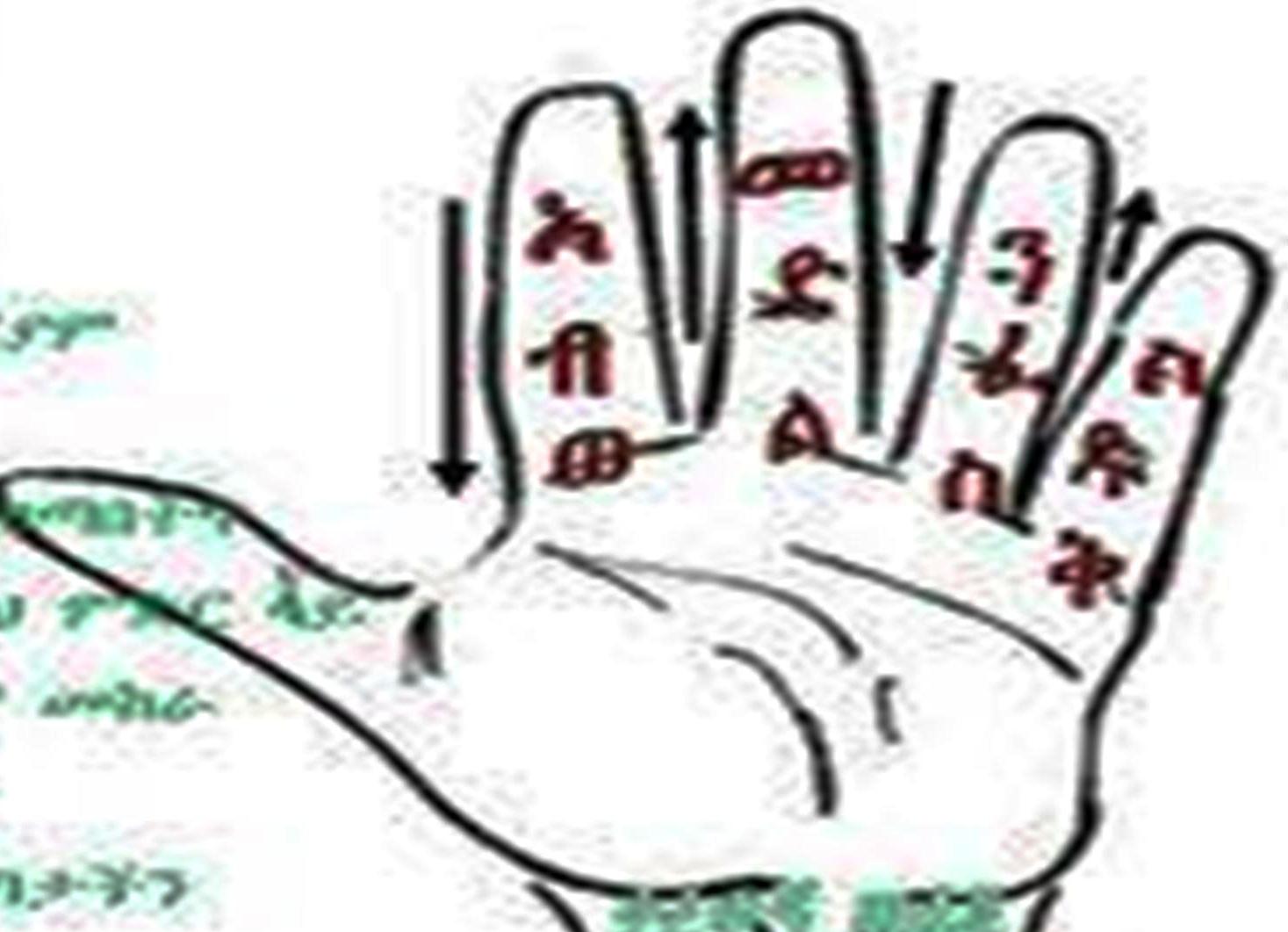
Counting our Fingers to confess our sins

Counting Segment of our fingers to say Lord have mercy

Using fingers for Egzio Mahirene

Posted in Confession | Tagged | Leave a comment

Is it a Time for a New Beginning?

In 3 parts, Father Fr. Bishoy Andrawes explains how to align our plan with God in the New Year.  A must listen.

Posted in Faith | Tagged | Leave a comment

How do I serve?

You may say that you have neither the power nor the means to lead souls to God; though you would willingly do so, you do not know how, as you can neither teach nor preach as did the Apostles.  As the difficulty probably often crosses your minds on account of the desires our Lord gives you of serving Him.  The devil frequently fills our thoughts with great schemes, so that instead of putting our hands to what work we can do to serve our Lord, we may rest satisfied with wishing to perform impossibilities.

You can do a great work and one most pleasing to our Lord: by doing all that is in your power, you would prove to His Majesty your willingness to do still more and He would reward you as if you had won Him many souls.  I will conclude with this advice; do not build towers without a foundation, for our Lord does not care so much for the importance of our works as for the love with which they are done.  When we do all we can, His Majesty will enable us to do more every day.  If we do not grow weary, but during the brief time this life lasts (and perhaps it will be shorter than any of you think) we give our Lord every sacrifice we can, both interior and exterior, His Majesty will unite them with that He offered to His Father for us on the Cross so that they may be worth the value given them by our love, however mean the works themselves may be.  May it please His Majesty, that we may all meet together where we may praise Him forever, and may He give us His grace.

Posted in Service | Tagged | Leave a comment

A portion of the Ethiopian Orthodox vesper prayer chanted in English

Posted in Divine Liturgy | Tagged | Leave a comment

Stretching of hands in prayer

Stretching of hands -Divine Liturgy

Lifting of hands-


Posted in Divine Liturgy | Tagged | Leave a comment

What is the Truth?

jesus

Pilate asked our Lord in His Passion to answer this question: ‘What is truth?’  Do we know how to answer this question, if it was posed to us today?  Many of us would say that is easy for Christ is the Truth.  That is true.  But, Can we answer it in the context of our relationship with Christ and each other?

I wish I could explain this better but am unable to do so.  Let us learn that if we would bear any resemblance to our God, we must strive to walk ever in the truth.  I do not merely mean that we should not tell falsehoods.  When we tell a lie, we are hiding our true identity and claim to be better than who we really are.  But we should desire that as far as possible we should be with perfect truth before God and man and above all that we should not wish to be thought better than we are; that in all our deeds we should ascribe to God what is His and attribute what is ours to ourselves, and that we should seek for sincerity in all things.  Surely we should be ashamed of resenting anything done or said against us—we who are the scum of the earth—when we see what outrages are offered to God our Creator within His very being, by us His creatures; yet we are wounded whenever we hear of an unkind word having been spoken of us in our absence, although perhaps with no evil intention.

Oh misery of mankind! When shall we imitate Almighty God in any way?  Let us not think we are doing great things if we suffer injuries patiently: rather let us bear them with eagerness; let us love our enemies, since this great God has not ceased to love us in spite of our many sins!  This is indeed the chief reason that all should forgive any harm done them.

Thus we shall care little for this world, which is but deception and falsehood, and therefore cannot last.  Once, while I was wondering why our Lord so dearly loves the virtue of humility, the thought suddenly struck me, without previous reflection, that it is because God is the supreme Truth and humility is the truth, for it is most true that we have nothing good of ourselves but only misery and nothingness: whoever ignores this, lives a life of falsehood. Realizing our nothingness and that we are no better than anyone else and that God IS ALL IN ALL is the TRUTH.  They that realize this fact most deeply are the most pleasing to God, the supreme Truth, for they walk in the truth.   O Lord Jesus Christ, grant us, Your servants, that we may have the grace never to lose this self-knowledge! Amen.

Posted in Faith | Tagged | Leave a comment